#Maths
#Pi
#Infinity
#Ratio-of-a-circle-to-its-diameter
In this lecture, I want to explore the concept of the universe being never ending. It’s hard enough to contemplate the distances of space, but to have a concept of space being so big as never ending, is the stuff of headaches.
Yet it’s a question some people will have spent a lot of time, trying to prove or disprove,
Some people just accept the notion its just to far away to even consider,
Some are convinced there is a wall,
But if there is a wall what’s it made of, and what’s on the other side, can there be nothing, a void of nothing, The concept of 0.
Let’s savour that point for a while, it’s certainly a possibility, but what if it is just too far away for light to even reach us? How can I prove or disprove infinite.
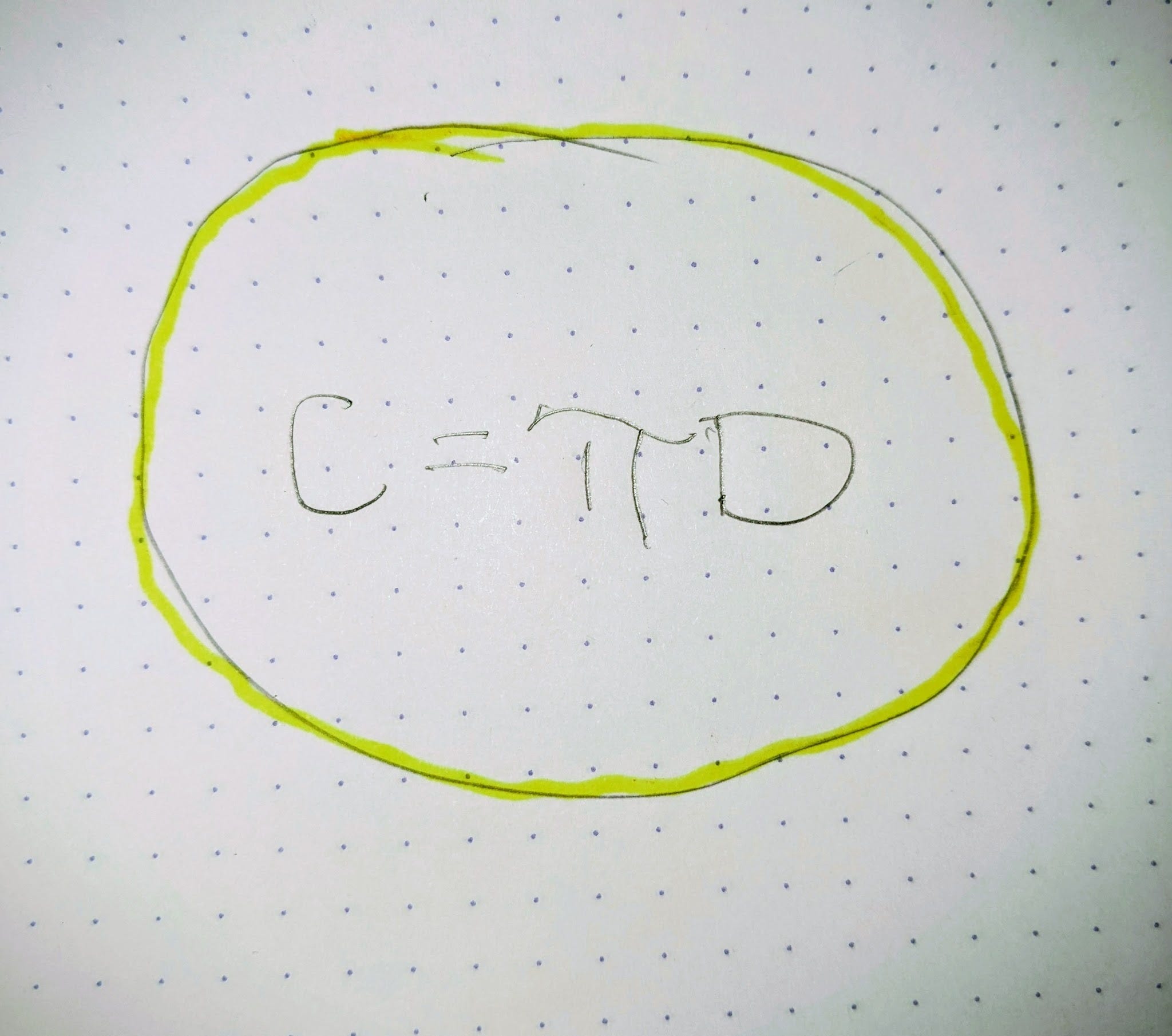
Perhaps there is maths, and here we have some proof of the infinite in the equation C=πD or the circumference of a circle is equal to Pi x Diameter
But what is π, well its the relationship of the Diameter to the circumference, It turns out that the answer is never ending, π is a number so big it holds all the knowledge, books, telephone numbers, names of every one who ever was, is, or will be, and then keeps on going, never repeating. For ever!
We do not have a computer capable of calculating this unique number,
For all intent, π is infinite.
Most of us know Pi as 3.1416, as the ratio of a circle’s circumference to its diameter. and that’s not so easy to prove, Scientists and mathematicians have not yet figured out a way to calculate pi exactly, since they have not been able to find a material so thin that it will work to find exact calculations. In the physical world, our pens and rulers have thickness. But in the world of pure math, π exists with zero thickness—which is why it can be infinite while our physical tools are not.
But these methods taken from https://www.wikihow.com/Calculate-Pi
Can I teach π well yes we can just measure the perimeter of a jar or circle
And use π=C/D
It’s a little crude but with practice you might get close to the 3.1416
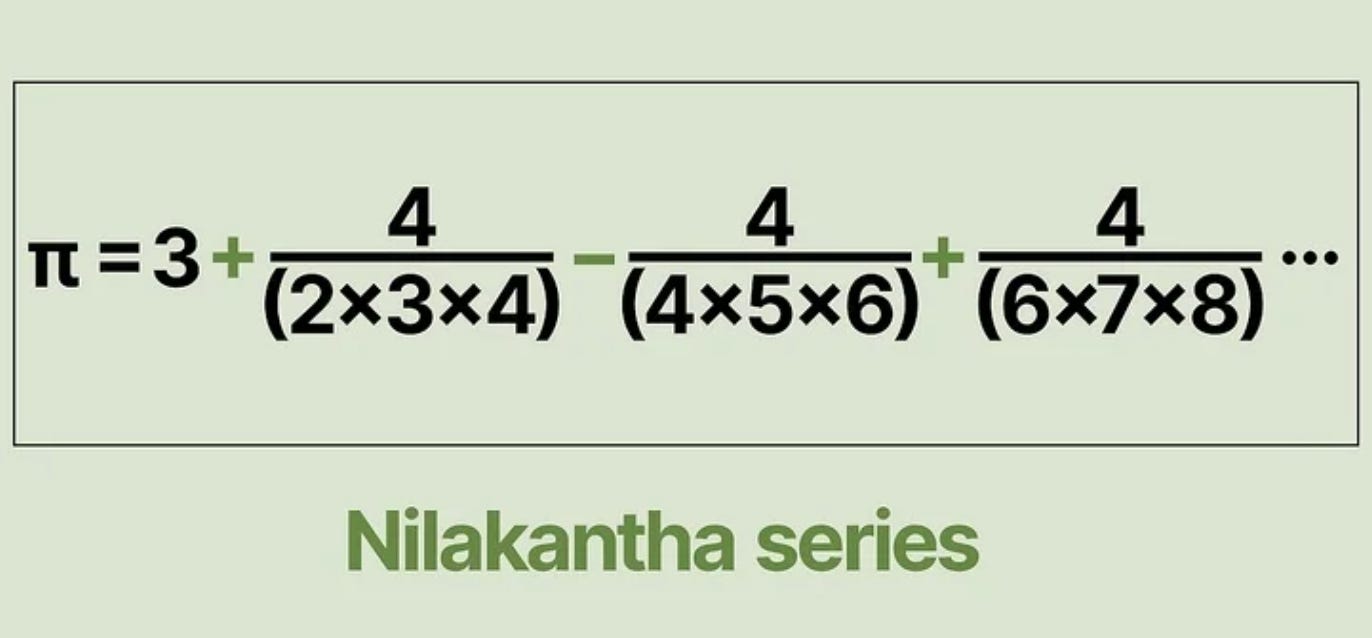
Or use the Gregory-Leibniz series.
π=(4/1)-(4/3)+(4/5)-(4/7)+(4/9)-(4/11)+(4/13)-(4/15) ⋯
Take 4 and subtract 4 divided by 3. Then add 4 divided by 5. Then subtract 4 divided by 7. Continue alternating between adding and subtracting fractions with a numerator of 4 and a denominator of each subsequent odd number. The more times you do this, the closer you will get to pi.
Or try this on a calculator, and this is were kids they will all start reaching for there phones,
Plug your number, which we’ll call x, into this formula to calculate pi:
x * sin(180 / x). For this to work, make sure your calculator is set to Degrees. The reason this is called a Limit is because the result of it is ‘limited’ to pi. As you increase your number x, the result will get closer and closer to the value of pi.
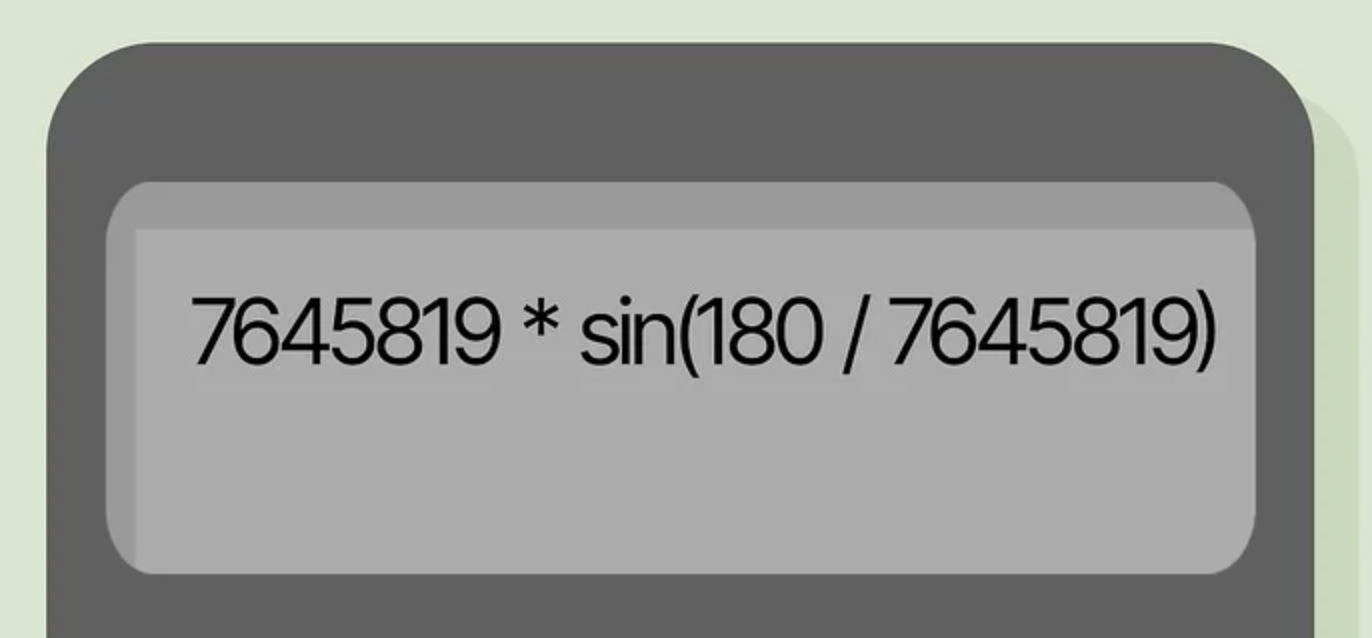
Just to prove it works
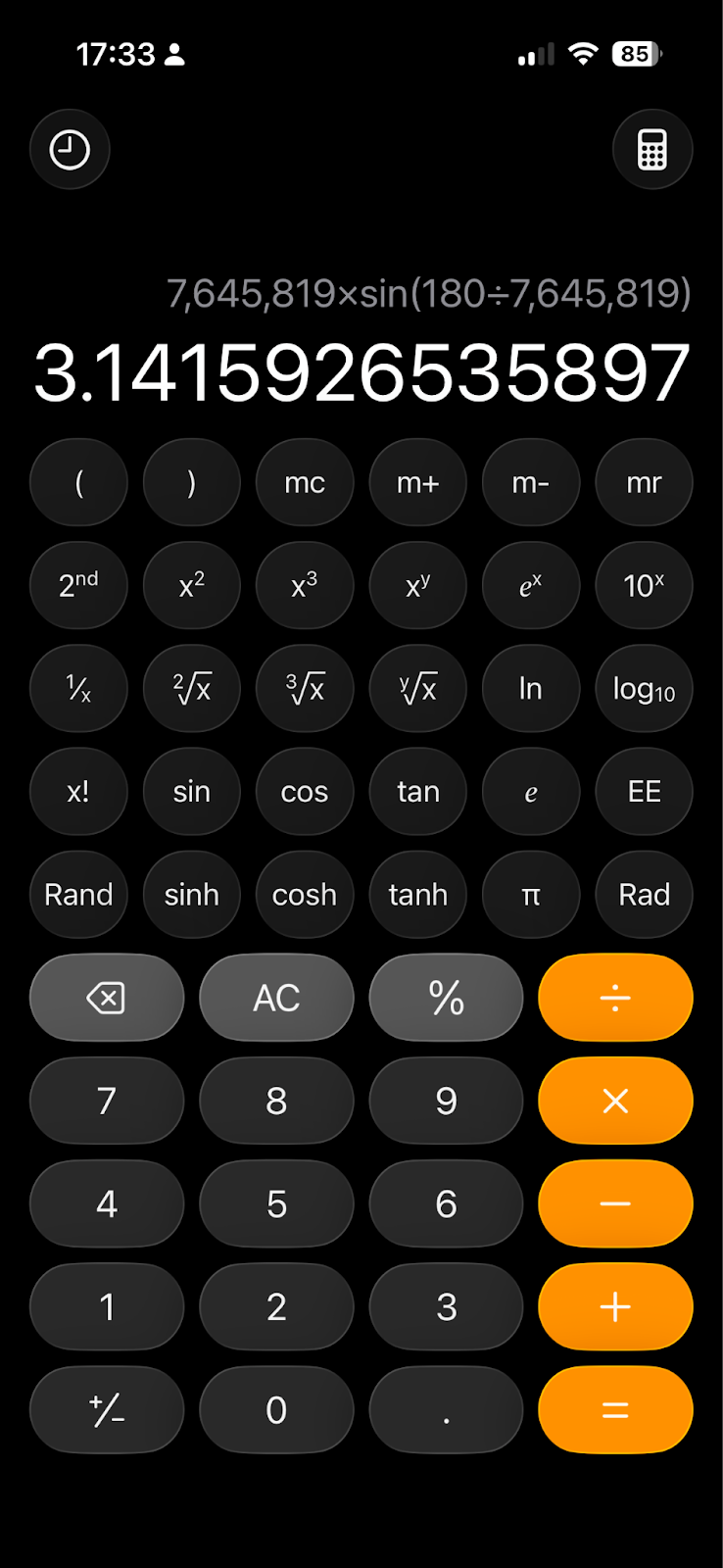
Try it with a small number first (like x=10), and then a huge number (like x=1,000,000). Watching the number “climb” toward $3.14159$ on you screen.
To put it simply If you want to move away from π for a moment, consider Zeno’s Paradox of Achilles and the Tortoise. To walk across the stage , you must first walk halfway. To cover the remaining half, you must first cover half of that. And half of that π is everywhere.
Ok we can now see the importance of Pi in proving the concept of Infinity
Can nature help, it turns out the answer is yes
If we look at a snowflake under a microscope we see intricate patterns, if we zoom in that pattern keeps repeating as far as we can zoom in. They are called fractals, and we see this concept in so many places in nature. From snowflakes to plants, they use these repeating patterns because it’s the most efficient way to maximize surface area for sunlight or nutrients) using a very simple “instruction manual” in their DNA.
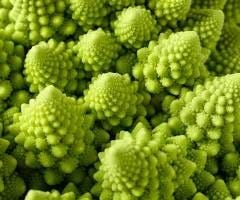
For example the Romanesco Broccoli (The “Perfect” Fractal)
This is the “gold standard” of botanical fractals. If you look at a head of Romanesco, it is made of smaller cones. Each of those cones is made of even smaller cones, and so on.
The Connection: It shows that a complex, infinite-looking structure can be built by repeating one simple rule over and over again.
Ferns (Self-Similarity)
A fern leaf is a classic “self-similar” fractal. The entire frond is shaped like a large leaf. But if you look at a single branch (a pinna), it is shaped exactly like a miniature version of the whole frond.
The “Infinity” Angle: In theory, if the plant didn’t have biological limits (like cell size), that pattern could go down to the microscopic level. It’s a “finite” object containing the logic of the infinite.
Its quite clear, that we struggle to perceive infinite space, but we hold infinity in our hands every time we pick up a piece of broccoli or a fern. Nature doesn’t see infinity as a ‘wall’; it sees it as a blueprint for growth1
How much “infinity” we actually need. While π goes on forever, NASA only uses about 15 decimal places of π to calculate interplanetary navigation with extreme accuracy. To calculate the circumference of the observable universe to the precision of a single hydrogen atom, you only need about 40 digits
So why do we keep calculating more digits of π if NASA only needs 15?, for two reasons: Stress-testing supercomputers and pure human curiosity.
The best of the best computers have calculated over 100 trillion digits so far.. We aren’t doing it because we need the measurement; we’re doing it to see if the pattern ever breaks. So far, infinity is holding steady.”
So, the next time you look at a wheel, a coin, or even the iris of a girlfriend or loved ones eye, remember that you aren’t just looking at a simple shape. You are looking at a boundary that contains an endless ocean of information. Infinity isn’t ‘out there’ in the stars; it’s tucked inside every circle on Earth, waiting for a decimal point that never comes, and we have not even touched the fibonacci sequence.
Will you ever walk past Romanesco Broccoli in the supermarket again without thinking of π?
Thank you
Gemini. (2026, March 2). On Fractal Geometry in Botany and the Concept of Infinity [Large Language Model]. Google AI.